
STPI Symposium 2026 Report
The Politics of Print: elephant in the room
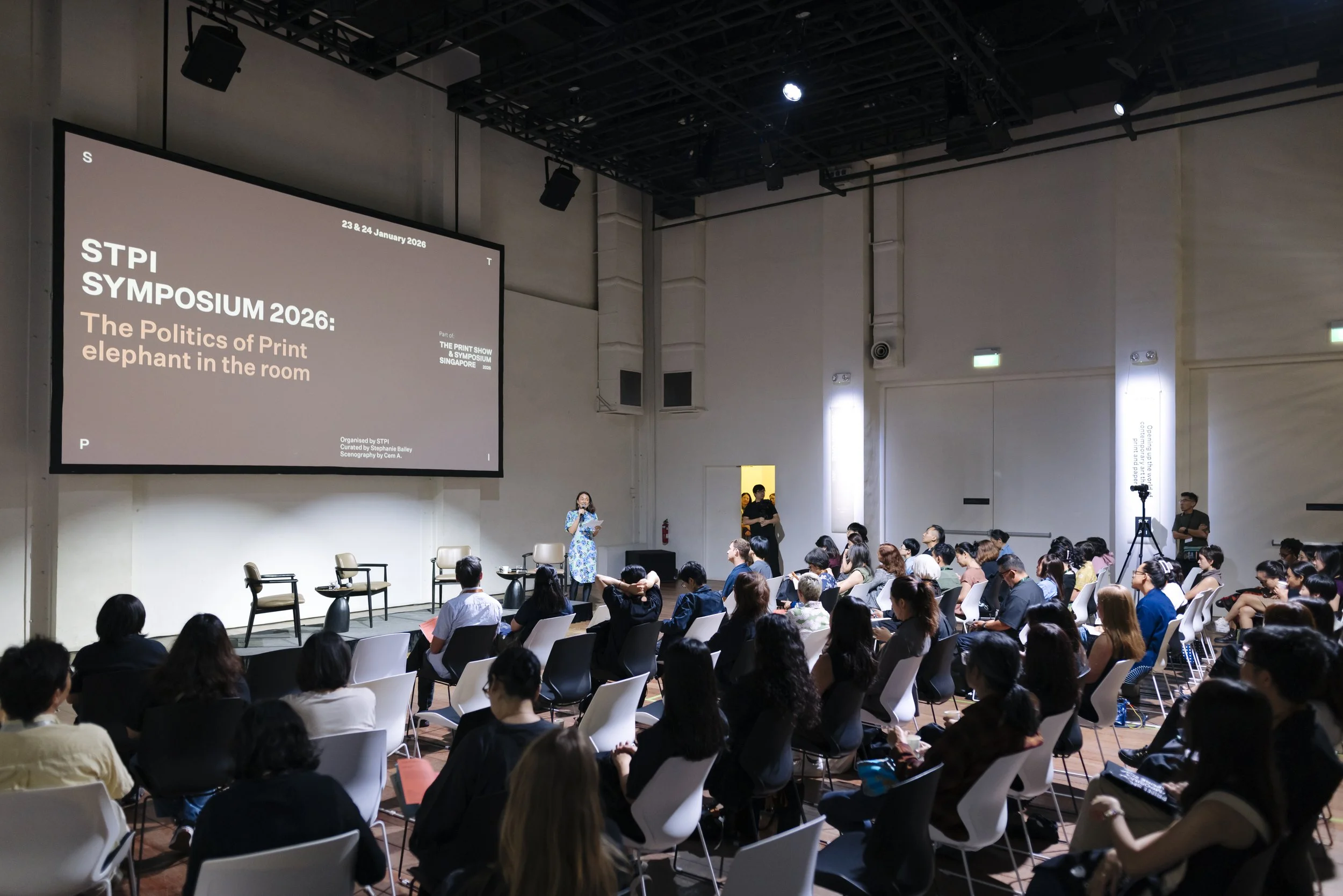
STPI Symposium 2026: The Politics of Print. Image courtesy of STPI.
The Print Show & Symposium 2026 comes in two parts, with a showcase of contemporary prints and a series of talks held over two days. Organised by STPI and curated by Stephanie Bailey, STPI Symposium 2026: The Politics of Print was held on 23 and 24 January at 72-13 Mohamed Sultan Road. The inaugural event aimed to foster discourse around printmaking. Various styles of presentation were also explored from panel discussions, to artist dialogues, as well as a contextual performance project by Cem A. which took the form of a lively debate, followed by a tête-à-tête.
The first day covered topics such as “The Politics of Print”, “New (Print) Markets, New (Print) Worlds”, and a keynote conversation “Print as Practice” with artists Pinaree Sanpitak and Michael Craig-Martin, the latter was unable to attend in person and spoke through a video recording. The second day featured three programmes: “Radical Printmaking in Asia”, “Crit Club: The Work of Art in the Age of Digital Reproduction”, a keynote conversation between Rirkrit Tiravanija and Salima Hashmi titled “The worse things are, the better the art becomes”, ending with a reflection by STPI Executive Director Emi Eu.
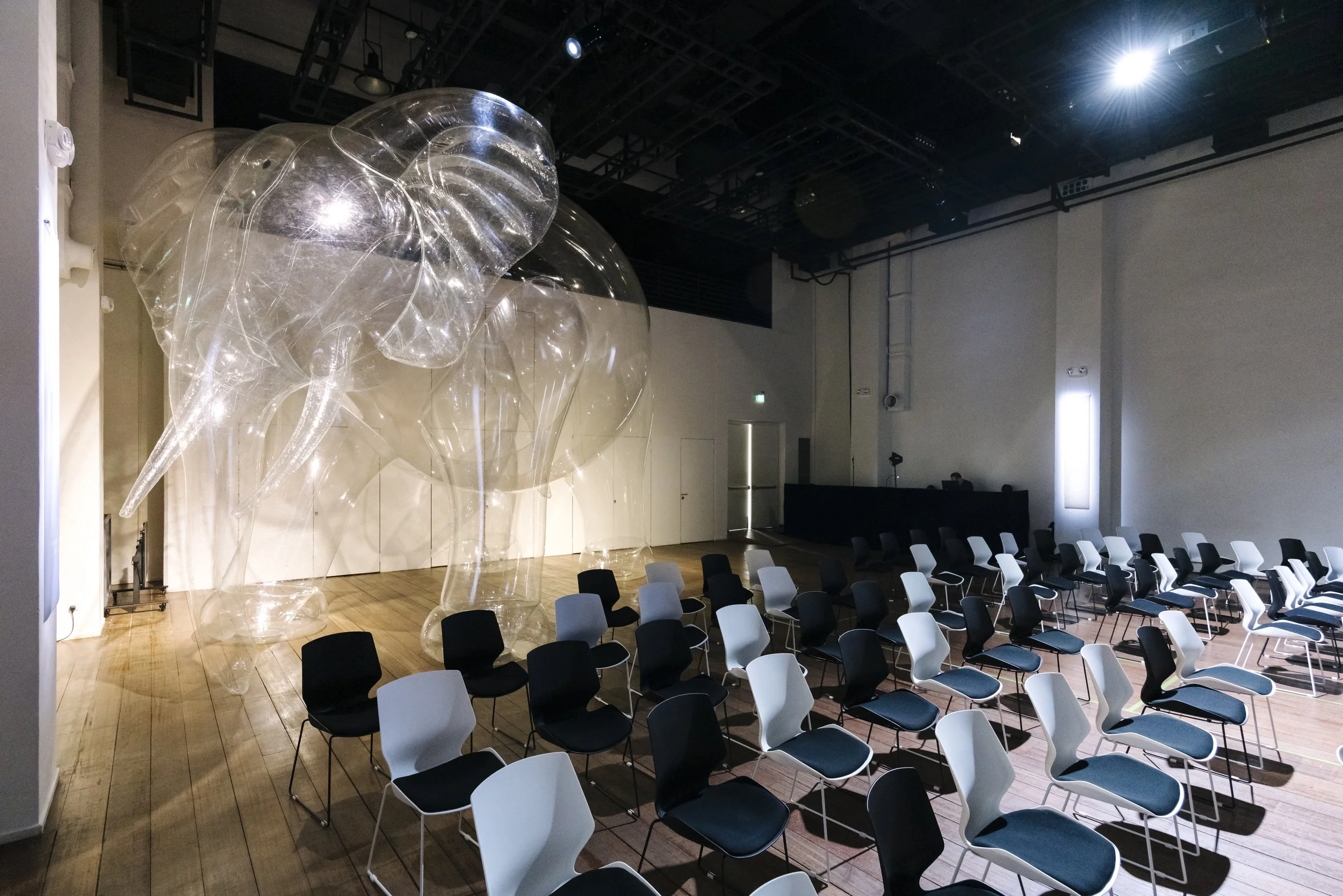
A transparent inflated ”elephant in the room” in the talks venue, STPI Symposium 2026: The Politics of Print. Image courtesy of STPI.
The event brought together an international line-up of speakers and attendees, which included institutional curators, artists, academics, independent practitioners, art market professionals and collectors. Guests were greeted by a transparent inflated elephant in the talks venue, a cheeky nod to the proverbial “elephant in the room” in the Symposium’s subtitle. This convivial atmosphere was carried through in a networking space where coffee and light refreshments were provided between sessions.
Here are some key takeaways from the Symposium:
The collaborative nature of print-making spurs a spirited exchange that makes it unique among artistic mediums.
The power of prints lies in its democratic potential, allowing for both personal reflection and communal solidarity.
Long-term sustainability of the print market is anchored on diversifying the pool of collectors and deepening appreciation for the craft.
Print also exists as documentation and a system of production at the forefront of technological change.
Print is ultimately a way of thinking.
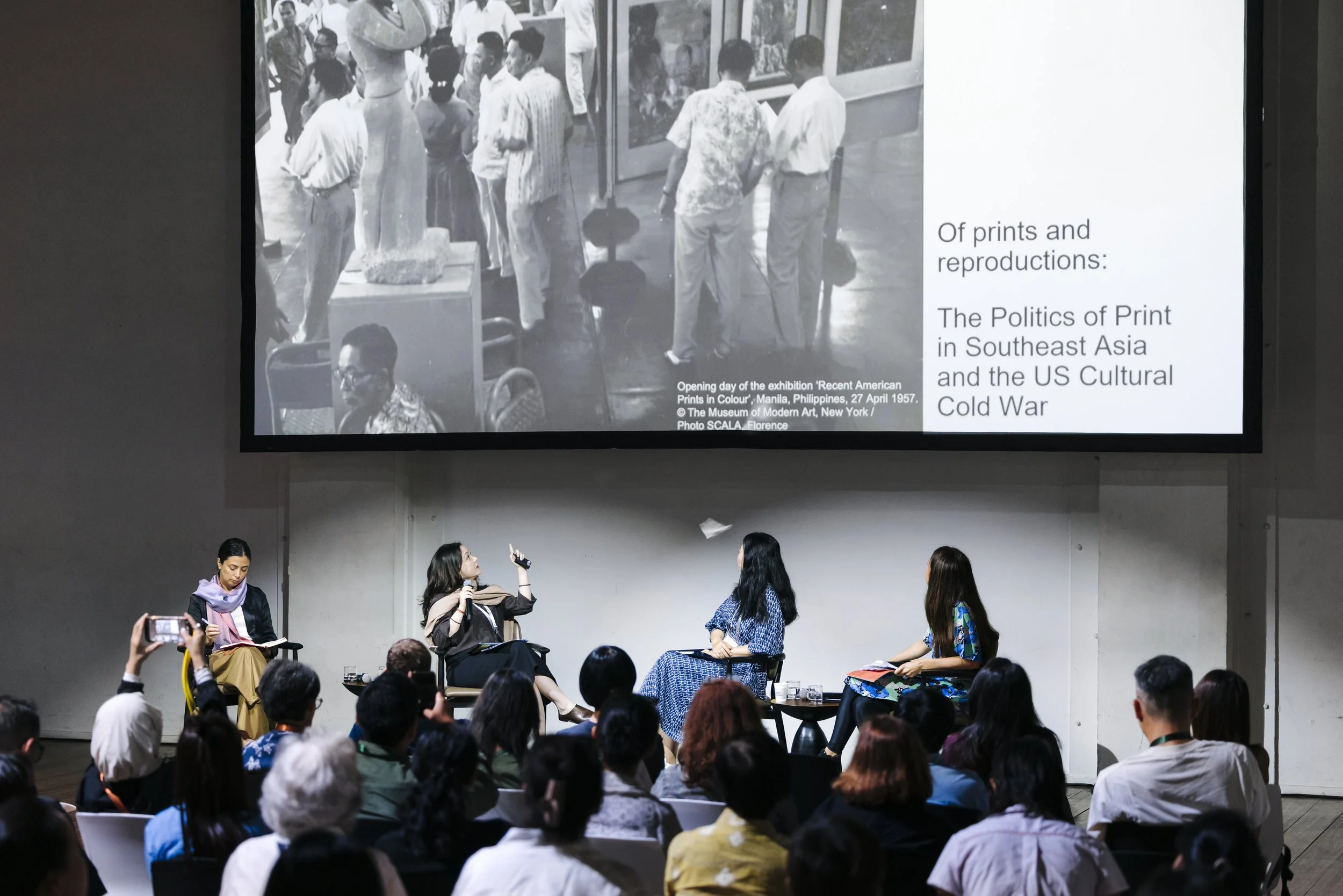
Photo from the opening panel discussion “The Politics of Print” on 23 January 2026, as part of STPI Symposium 2026: The Politics of Print. Image courtesy of STPI.
The collaborative nature of print-making spurs a spirited exchange that makes it unique among artistic mediums. The opening panel discussion “The Politics of Print” delved into how collaborations and communities come together through the processes and imagination in print. Wu Mo spoke about how Zao Wou-Ki’s engagement with prints and poetry reflects a cross-cultural and interdisciplinary community in Paris. Özge Ersoy framed print as a social practice for artists Lala Rukh and Sheba Chhachhi, whose street posters and screenprinting workshops intervened in public life and highlighted gender justice issues. Kathleen Ditzig approached the topic through the lens of the cultural Cold War, where local artist groups in Southeast Asia absorbed the mechanisms of international travelling exhibitions from the Museum of Modern Art to contextualise their own local art histories. The three speakers built upon each other’s case studies, to surface a shared connection: the politics of print is embedded in the praxis of working together.
The power of prints lies in its democratic potential, allowing for both personal reflection and communal solidarity. The “Radical Printmaking in Asia” panel unpacked how prints galvanised key political and social movements globally. Nozomi Naoi elucidated how Japanese printmaking in the 20th century was able to bolster communal memory and collective discernment following war and tragedy. Through its wide circulation, print artists and writers could craft shared recollections that helped Japanese citizens process events such as the Great Kanto Earthquake, as well as their complicity in the Second World War. Sook-Kyung Lee shared her experience of working with Malaysian collective Pangrok Sulap for the 14th Gwangju Biennale. Through their large-scale prints executed in a social realist style, Pangrok Sulap offered an accessible and intimate way of representing the suffering and resistance during the Gwangju Uprising in 1980. She noted that such works had an ability to transcend time, speaking to our current global contexts as they illustrate ideals of liberation and justice. The qualities of affordable reproduction and direct communication enabled prints to be a democratic medium for potent social messages.
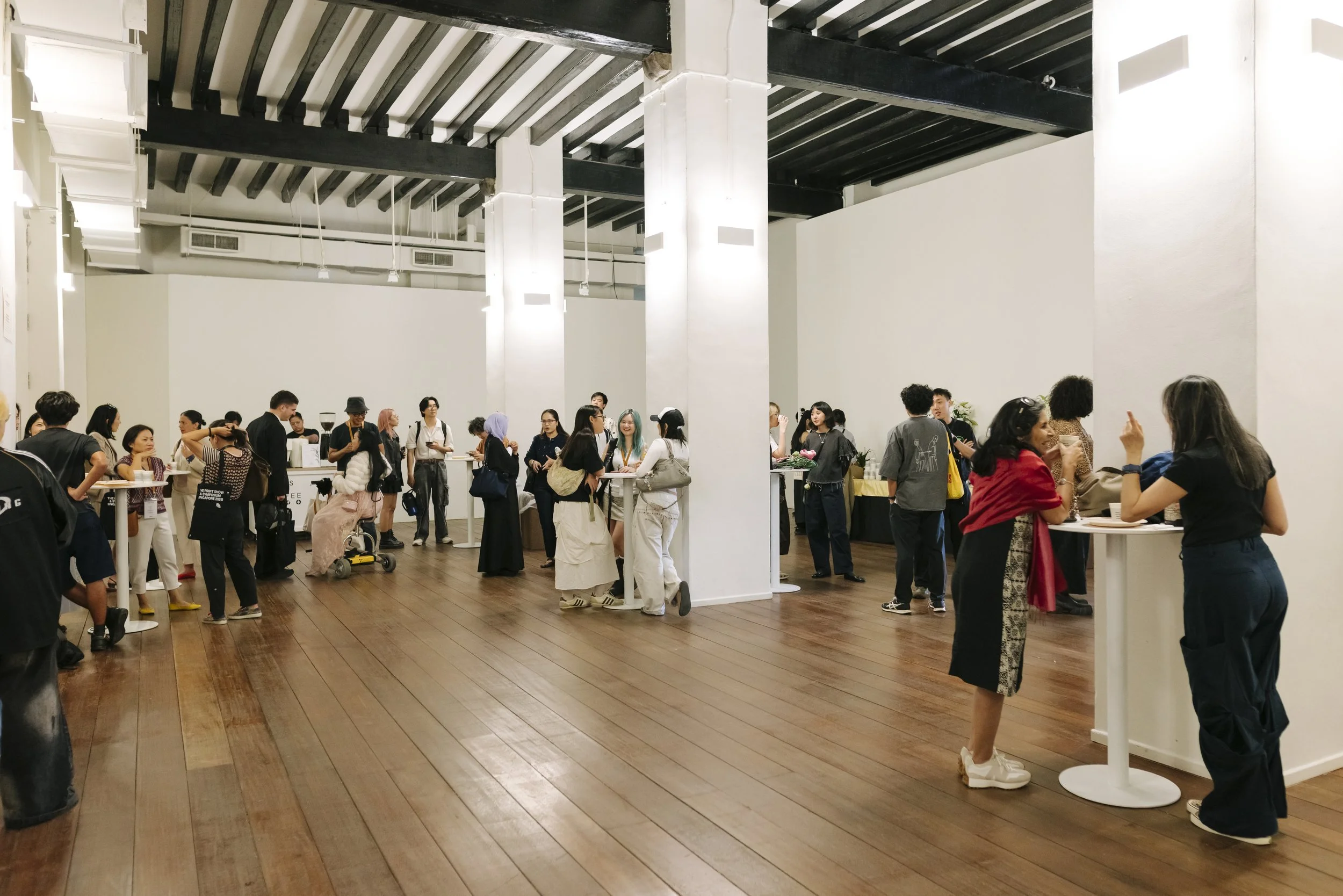
A space for networking between sessions, STPI Symposium 2026: The Politics of Print. Image courtesy of STPI.
Long-term sustainability of the print market is anchored on diversifying the pool of collectors and deepening appreciation for the craft. Speakers on the “New (Print) Markets, New (Print) Worlds” panel highlighted how the digital revolution has brought new audiences and energy to the medium. Mazdak Sanii mentioned that between 70% to 80% of buyers in each Avant Arte project are newcomers. Even though prints are often considered the “gateway drug” into collecting, he also observed seasoned collectors broadening their collections with prints. Jenny Gibbs highlighted how primary market sales reflect a clear uptick with sold out booths at IFPDA, despite perceived market volatility in the auction data. Picking up on that point, Molly Steiger cautioned about using auction results as a benchmark without taking into consideration important variables such as artwork condition. To develop resilience in the print market, Sanii stressed the importance of programming and storytelling to deepen collectors’ connections with the artists. Gibbs concurred, stating how it needs to work in tandem with galleries and print publishers who invest in an artist’s career to roadmap editions and portfolios.
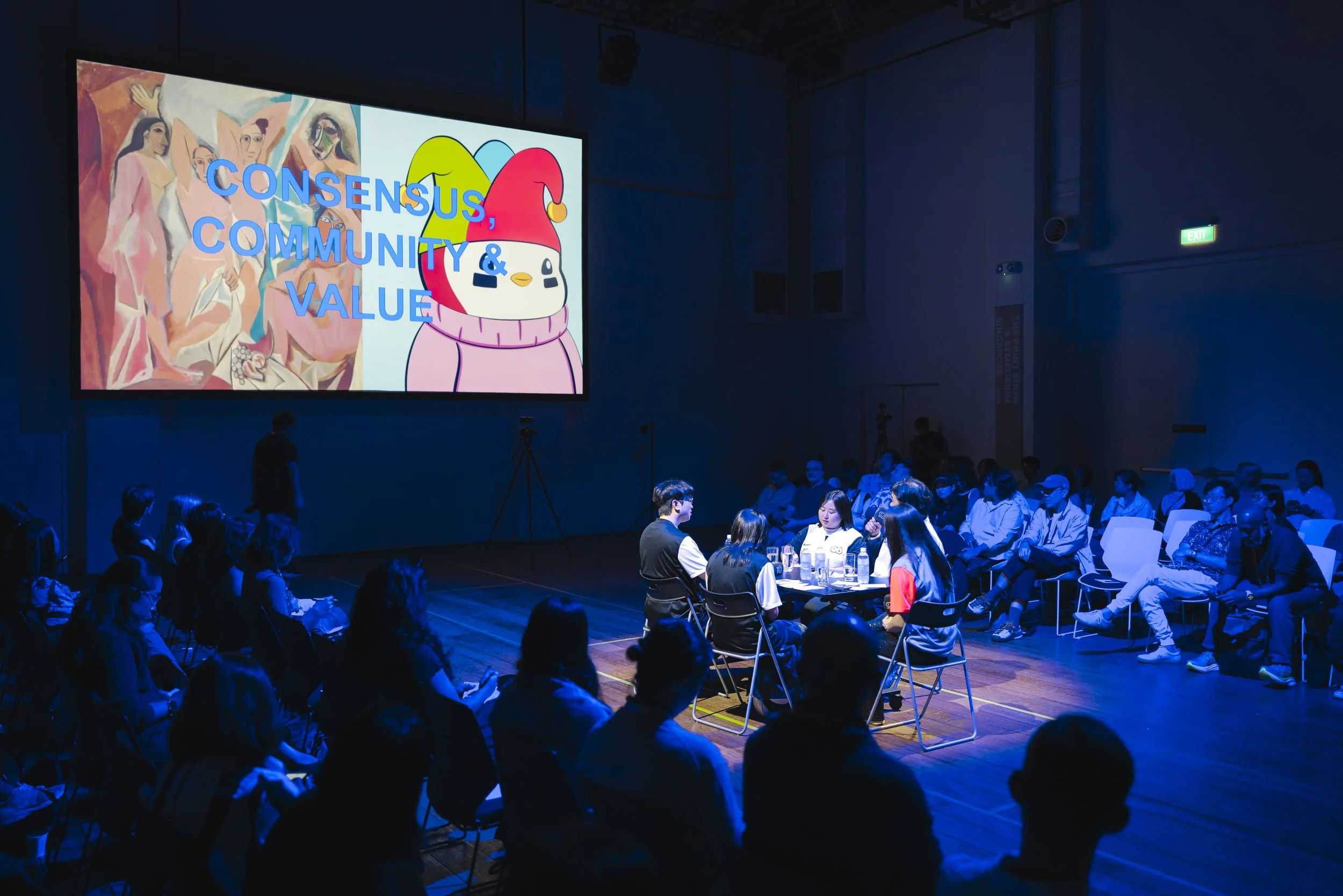
Photo from the debate “Is an NFT’s Worth in the Art or the Trade?” on 24 January 2026, as part of STPI Symposium 2026: The Politics of Print. Image courtesy of STPI.
Print also exists as documentation and a system of production at the forefront of technological change. Naoi mapped the development of printmaking in Japan from the Edo period, beginning as an ecosystem of publishers and craftspeople financed by commercial advertisements. Printmakers later adopted new technologies during the Meiji era which improved efficiency. Similarly, Bishal Yonjan observed how artist Tek Bir Mukhiya’s archive reflects the arc of print’s development in Nepal from hand-drawn typography, to offset printing, and digital tools such as Photoshop. In Southeast Asia, Ditzig explained how the import of printmaking technology and infrastructure from the United States of America (USA) into the region was part of the bid to win “hearts and minds” through culture and broader USA postwar world-making. The Crit Club sessions situate the zeitgeist of print in the realm of digital reproduction. The debate “Is an NFT’s Worth is in the Art or the Trade” ended with the majority of the audience voting for the notion that its value lies in the trade. Connecting the dots from historical research into contemporary contexts, these perspectives demonstrate how the discourse around print is closely intertwined with technological development.
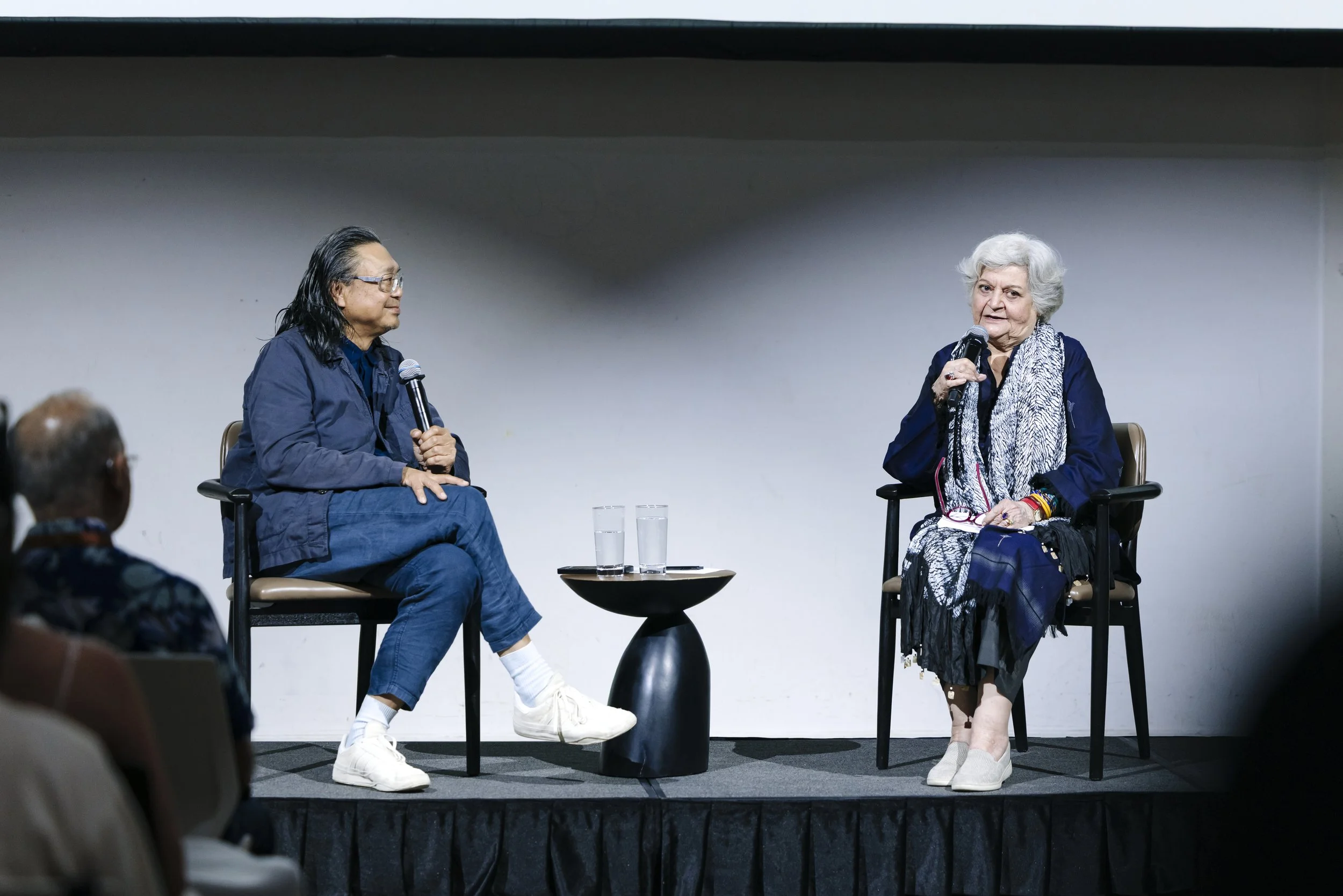
Rirkrit Tiravanija and Salima Hashmi in dialogue for the Keynote Conversation: ‘The worse things are, the better the art becomes’ on 24 January 2026, as part of STPI Symposium 2026: The Politics of Print. Image courtesy of STPI.
Print is ultimately a way of thinking. The sentiment is echoed across different panels. Wu Mo talked about print as a medium that required the artist and masterprinter to deconstruct form and work many steps ahead. Coming from the artist’s perspective, Craig-Martin and Sanpitak value the long-term relationships with print workshops as an avenue for true collaboration and mutual learning. Sanii points to print edition sales as a mode of fundraising where more people could engage with cultural institutions and be cultivated into future patrons. Moderator Siddharta Perez summed up these points succinctly when she said print transforms public into participants, consumers into comrades.
In sum, STPI Symposium 2026 made a strong case for the enduring relevance of print. By laying out its historical significance and extending it into the digital era, it reframes print discourses by highlighting its ethos of collaboration and communication. These qualities remain essential for contemporary practices and provide food for thought in connecting art with the broader sociopolitical landscape.
This article is presented in partnership with STPI.
The Print Show opened on 22 January 2026, and has been extended to 7 February 2026. For more information, click here.